2026 First-Flush Garden Report
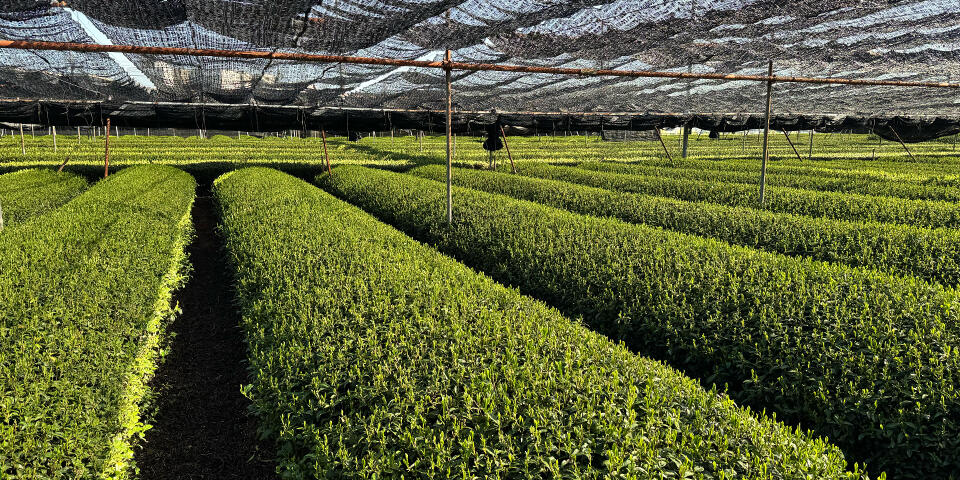
Our family has cultivated tea in Uji since the early Edo period. Today, Yamamasa Koyamaen continues that tradition at our own tea gardens, growing tencha -- the leaf used to produce matcha -- under shade coverings for premium Uji matcha production.
This update introduces our scissor-cut garden -- tea fields harvested by machine. The neatly trimmed rows and uniform canopy are perhaps the most familiar image of a Japanese tea garden.
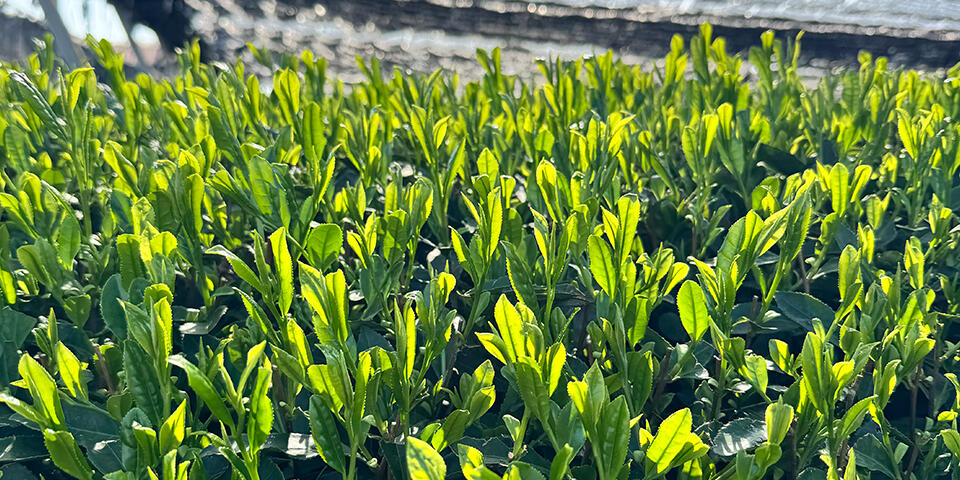
Growth Patterns and Varietal Differences
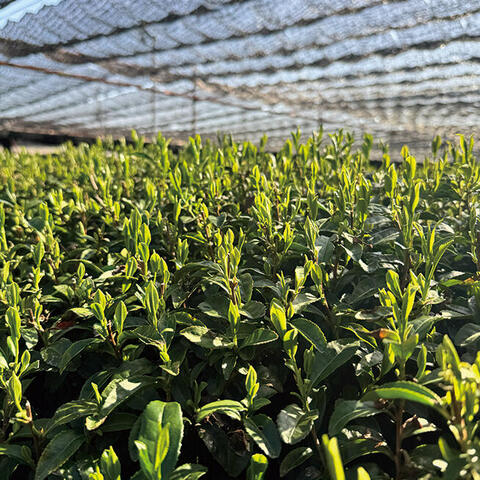
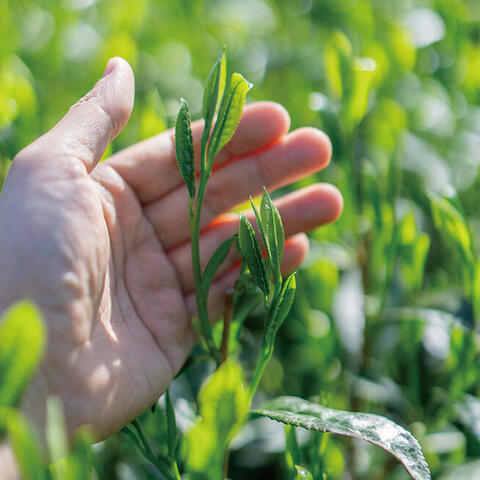
Look closely, and you will notice that neighboring trees can show remarkably different bud development. This is not inconsistency -- it is intention.
Growing multiple tea varieties serves several purposes. It creates diversity in flavor and quality, and by staggering the optimal harvest timing across varieties, it allows harvesting to proceed smoothly without concentrating all the work into a single window. This matters especially in Kyoto, where premium matcha production demands that each leaf be picked at precisely the right moment -- not too early, not too late.
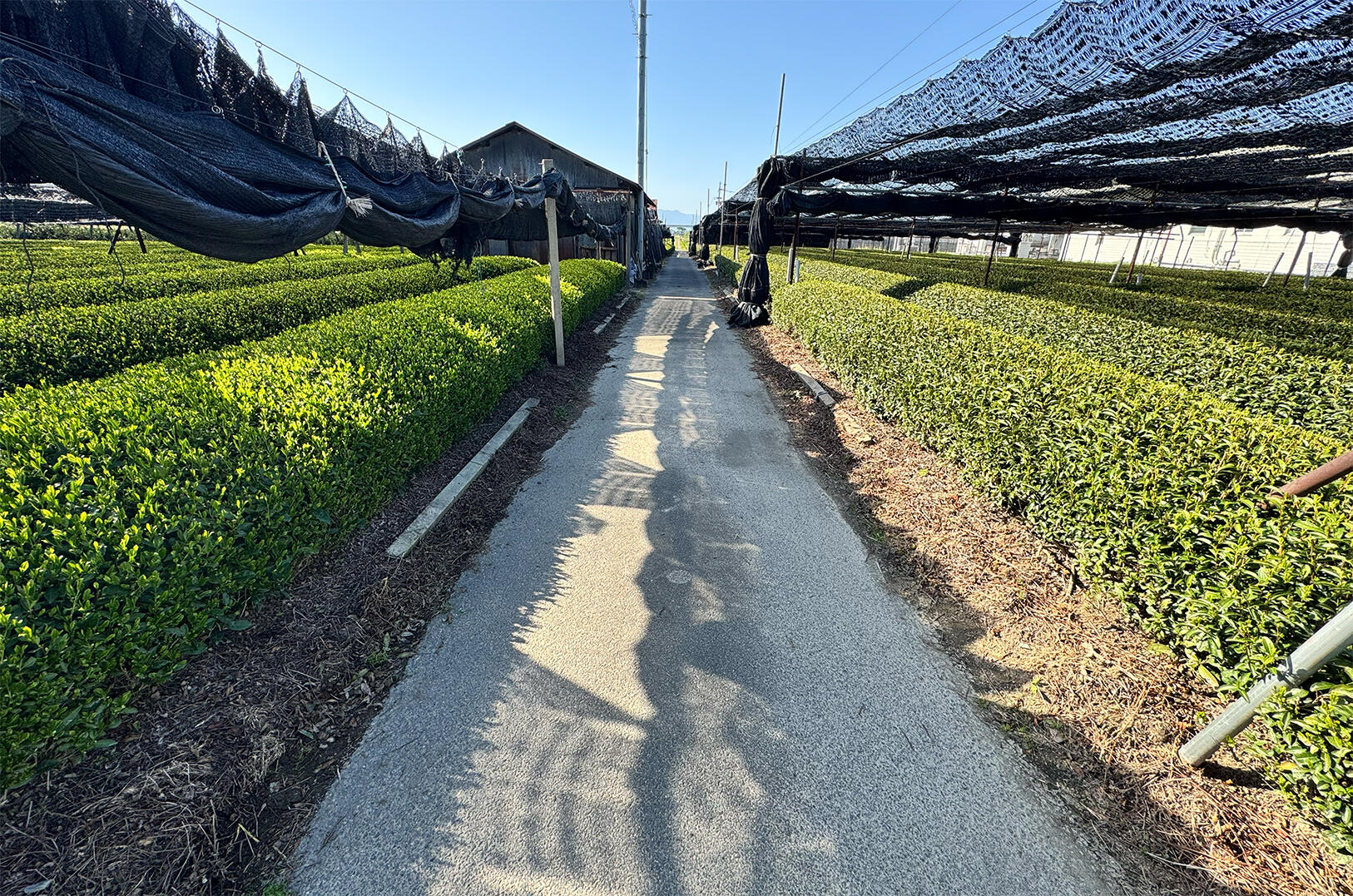
For this reason, tea-growing regions here cultivate a wide range of varieties: those suited to matcha flavor profiles, those better adapted to hand-picking, and those that ripen early or late in the season.
At Yamamasa Koyamaen, we grow and harvest a number of these varieties -- including Samidori, a cultivar selected by our third-generation head Masajiro and registered as a Kyoto Prefectural recommended variety.
This is where this year's matcha begins. Enjoy the green a little longer -- the harvest is nearly here.