The simultaneous expansion and maturation now unfolding in matcha, amid surging global demand
An op-ed by our company director, Masayoshi Koyama, was recently published in the Asahi Shimbun's morning edition opinion column, "My Perspective" (私の視点).
In recent years, matcha has been spreading rapidly around the world. While it has become widely loved as a base for lattes and sweets, a growing number of people are also taking interest in differences in origin, cultivar, cultivation method, production method, and producer.
In most food markets, a product typically becomes widely popular first, and understanding of its quality and background deepens only afterward. In today's matcha market, however, "spread" and "maturation" are happening at the same time.
While this rapid change is expanding matcha's possibilities, it is also creating challenges -- supply shortages, rising prices, and a growing imbalance between price and quality.
Matcha is not simply a passing trend.
As a food culture cultivated in Japan over a long span of time, the question is what we choose to preserve, what we choose to pass on, and how we carry it forward to the next generation.
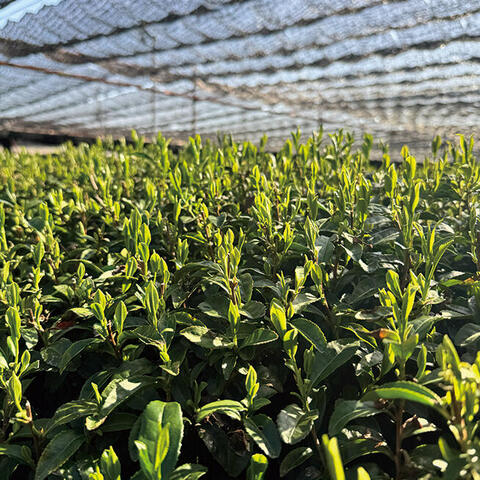
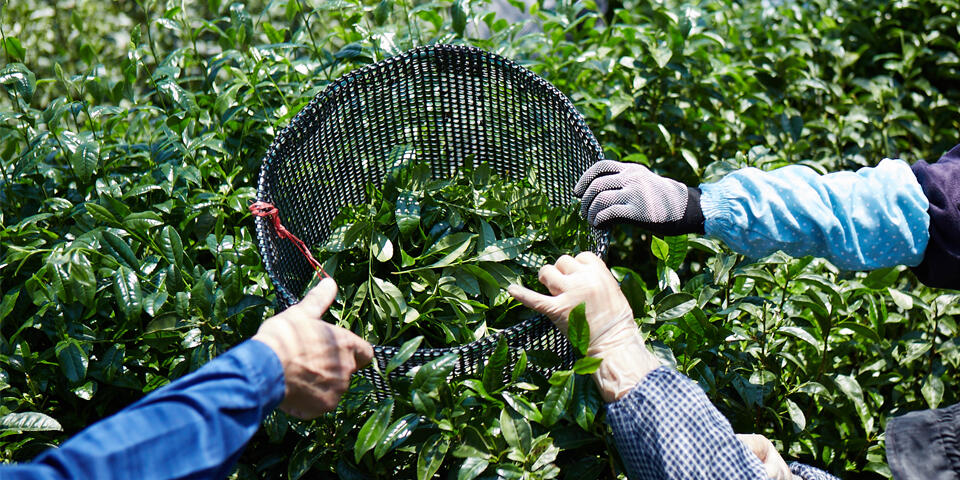
Having been involved in cultivation and production as a tea wholesaler that owns its own tea fields, and having observed consumption both in Japan and abroad, this op-ed reflects on the current state of the matcha market from that vantage point.
The article is available on Asahi Shimbun Digital at the link below:
Asahi Shimbun Digital, "My Perspective"
https://www.asahi.com/articles/DA3S16490359.html
The full text of the contributed manuscript is provided below.
Op-ed contribution by Masayoshi Koyama, Director, Yamamasa Koyamaen Co., Ltd. -- published in the Asahi Shimbun's "My Perspective" opinion column.
In recent years, global demand for matcha has grown rapidly. Matcha lattes and sweets have become common sights around the world, and it is now an everyday scene to see tourists in Japan seeking out matcha. Rising health consciousness and growing interest in Japanese culture have added momentum, and the visual nature of social media has accelerated this further -- markets are expanding simultaneously, at a scale and speed unlike anything seen before, across many countries and regions at once.
I myself am involved in cultivation and production as the head of a tea wholesaler that owns its own tea fields, and I also operate our brand's own café, which keeps me close to how matcha is actually being consumed, both in Japan and abroad. From this vantage point, I have come to feel that this expansion cannot be fully explained by demand growth alone.
Normally, when a new food product spreads, it first becomes widely available, and only afterward does interest in quality and differentiation gradually build, as the market matures. With matcha, however, these two processes are happening in parallel.
Part of the reason lies in the nature of how this demand has spread. In some regions, matcha-flavored products are simply being accepted as they are; in other, more mature markets, consumers are already making choices based on origin and producer. Because markets at very different stages are expanding at the same time, demand is now converging on matcha of every grade simultaneously.
At the same time, the ease of cross-border information sharing and purchasing online -- combined with a weaker yen driving more inbound tourism and actual consumption -- has significantly compressed a maturation process that would normally unfold slowly.
Within this structure, several shifts have emerged. First, supply has continued to fall behind demand. Matcha is constrained by limited raw material production, and cultivation and processing both require a high degree of skill, making it difficult to scale up supply in a short period. As a result, shortages and sharp price increases have occurred, making it harder even for those who have long enjoyed matcha to obtain it. Pricing that doesn't always correspond to quality is also becoming more common.
At the same time, matcha's character as a connoisseur's product is also strengthening. A growing appreciation for differences in producer, origin, cultivar, and method of cultivation and processing -- and the resulting differences in flavor -- echoes developments we've seen in the wine market.
In this way, the matcha market is experiencing several things at once: the expansion of casual, easy-to-enjoy matcha; distortions in price and supply caused by concentrated demand; and the maturation of matcha as a connoisseur's product. This is not simply a passing trend -- it is a new phase in which expansion and maturation overlap.
Matcha is part of a food culture that has been cultivated in Japan over a long span of time. The question now, I believe, is this: having taken a step back to see this expansion clearly, what should we choose to preserve as its core value, and how should we choose to pass it on?
Originally published in the Asahi Shimbun morning edition, "My Perspective" column.
Written by Masayoshi Koyama, Director, Yamamasa Koyamaen Co., Ltd.